Dover Bitch

Monday, July 02, 2007

Popular Impressions Outside Government

A couple weeks ago, for a different reason, I quoted a passage from Richard E. Neustadt's Presidential Power:

What is incredibly gut-wrenching to so many of us is the previously unimaginable extent to which the GOP Congressional leadership and noise machine has been willing to defend the indefensible. Which brings me to the opposite page (165) of my copy of Presidential Power:

In the aftermath of Watergate, however, we have seen occasions where distinctions between reputation and prestige seemed to dissolve, where Washingtonians seemed quite like members of the general public, reacting to a President in almost the same terms, conducting themselves accordingly.' One such occasion was the "Saturday night massacre" of 1973 when Nixon fired the Watergate Prosecutor, forcing resignations from the Attorney General and his Deputy, all of whom responded on TV. This dramatic sequence-televised and thus "firsthand" in all parts of the country seemed so to contradict the President's contentions as to drain them of credibility, enlarging what we now label a credibility "gap," indeed extending it so wide as to cast doubt on his legitimacy and with it his authority as President. Nixon seemed to be engaging in a cover-up of criminal activity. He seemingly was fighting law enforcement. But he had sworn an oath of office encompassing the "take-care" clause. Hence the cloud on his legitimacy. The "massacre" tripped off impeachment proceedings. It is easy to see why.

What was striking then is that inside the government or near it, in the watchful circle of the Washington community, reactions against Nixon seemed to have so much in common with the popular impressions outside government. Citizens at large were swept into a "firestorm" of protest and suspicion. But so were commentators, congressmen, and civil servants. Apparently the President's behavior planted the same question in all minds. Some Washingtonians, waiting upon evidence, were slower than others to draw ultimate conclusions, and slower by far than some citizens, but he was treated henceforth with reserve throughout the Washington community. Diplomacy aside-there was a crisis in the Middle East-he turned away from governing and focused on the prospect of impeachment. Had Nixon tried to be assertive in domestic spheres, I take it that he would have been ignored or resisted. All over town officials shook themselves free of the White House, released by suspicion from deference, distancing their programs from his person. This occurred within one year of his triumphant re-election, three years before expiration of his term. For Washingtonians it was a most uncharacteristic reaction, especially so early in the term. Calculations about possible impeachment played a part, no doubt. But so did outraged feelings about Nixon's performance. There was precious little rallying around him. Instead, so far as I can judge, there was a widespread sense, even in some quarters of the White House, that he had compromised his right to be there and should go, impeached or not.


It is hard to imagine Washingtonians having less "in common with the popular impressions outside government" today (or during the Clinton impeachment proceedings.) As Digby correctly noted in her magnificent speech, the mainstream media -- the High Broderism and Meal Ticket Journalists -- have failed us completely.


Sure enough, today provides yet another example of "official punditry" marching completely out of step with the public at large. I'd link straight to Timothy Noah's piece in Slate, but (as always) I found Digby had already told him how it is by the time I finished reading it.

But poor little Scooter can't even spend a month in jail. He can't even spend a day in jail.

And apparently, as predicted, that's just fine with a good portion of the DC establishment. The oh-so-jaded political observers like Tim Noah see this whole thing as some sort of partisan game of tag. Let the plebes natter on about the following the rules --- we'll call the play by play and let the little people know who's "winning." From their perches atop the commentariat they smugly dismiss the concerns of average Americans who are enraged that these people keep cheating and getting away with things that ordinary citizens and even powerful Democrats could never dream of getting away with --- they relentlessly smear their opponents with the filthiest lies, they stage partisan impeachments, they steal elections, they illegally start wars and make up novel authoritarian theories of governance --- and then they use their powers to excuse their minions from the consequences of these actions if they happen to get sloppy and get caught. None of them ever pay. Ever.


How revolting.
Labels: , , ,

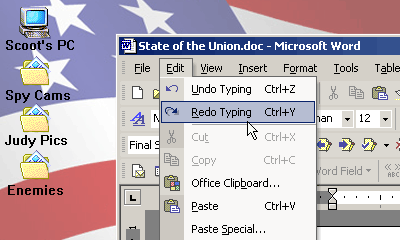
Scooter, felon

What a coward the president truly is. I've got nothing to add right now, other than my sense of outrage. Another fine example of the Bush administration manipulating justice for political purposes.

Labels: , ,

Monday, June 25, 2007

Christie: Unnamed sources are unfair

Can you find a better example of political cognitive dissonance than Ron Christie's appearance today on Tucker, mercifully hosted by David Schuster?

Christie was on the program to defend Dick Cheney, his former boss, and to continue calling for a pardon for Scooter Libby. The clip at Crooks & Liars is a must-see primarily for its end, when Schuster says:

You're a great guest, you're a great guy, but on the politics and the law in the Scooter Libby case, you're wrong.


MSNBC really ought to bring back the Gong Show. They could give gong beaters to Keith Olbermann, Schuster and Jack Cafferty (hired away from CNN). Then, during a Chris Matthews interview, they could bang away on the thing, half the time while Tweety is asking one of his insipid questions.

Christie would have earned the gong so many times in this interview, they'd have to buy a new one. In addition to his support of the nonsensical position that Cheney is a member of the legislative branch and his fact-free defense of Libby, Christie floated this absurd gripe a few times:

...I would say this to you: So much of this article, I looked at it there are all these unnamed quotes and these people who won't speak on the record...

[...]

First of all, that makes the assumption that everything in was in that Post article was true, which... I do not necessarily subscribe to that. When you have unnamed sources, when you have people who are unwilling to have the courage to put their name behind some of the statements...

[...]

The problem with this sort of "gotcha politics" that's going on with this Post story it seems to me is that there's one side of the story. What else is there? What is it that we don't know? I would just hope that some of the folks who have come forward with these anonymous quotes and these leaked materials would put their names to it so they could actually give this a little more color.


This is from a man who is vehemently defending a convicted liar who, at the bequest of the vice president (whom he is also defending) leaked classified information to Judith Miller, demanding that the quotes be attributed to a "former Hill staffer." The information he gave her from the NIE was only "one side of the story" and was exaggerated at that. The quotes went into the paper so Cheney could go on the Sunday talk shows and point to the article as confirmation of the need to follow his nefarious agenda and start an unnecessary war in Iraq.

There could not possibly be a better example of a pair of men using anonymous, one-sided leaks of information in a more perverse manner of manipulating the American people than Dick Cheney and Scooter Libby -- the exact duo Christie is on television to defend.

Cry me a river, Ron.

Labels: , , ,

Wednesday, June 20, 2007

Presidential Power

Thinking about how radical the Bush administration has been led me to pick up my dusty copy of Richard E. Neustadt's Presidential Power, one of the best books ever written about the executive branch. I just wanted to see how (my outdated copy of) the book holds up in light of the absurd nature of politics and the media in the early 21st Century. In some respects quite well, in others, not so much.

Interestingly, I found two opposite pages (164-165) that stuck out in my mind for different reasons, and both are bouncing around in my head today.

The first is this:

In 1898, two years before Wilson's apologia, a scholarly observer who may well have influenced him wrote a deeper book than Congressional Government. This was Henry Jones Ford, his book The Rise and Growth of American Politics. Correctly, in my view, he even then put the Presidency at the system's center:

The agency of the presidential office has been such a master force in shaping public policy that to give a detailed account of it would be equivalent to writing the political history of the United States.

The evidence... history affords seems conclusive of the tact that the only power which... define[s] issues in such a way that public opinion can pass upon them is that which emanates from presidential authority. ...

The rise of presidential authority cannot be accounted for by the intention of presidents; it is the product of political conditions which dominate all the departments of government, so that Congress itself shows an unconscious disposition to aggrandize the presidential office. ...


Eighty years later the trend seems the same.


Today, the talking heads are having a field day with the news that Congress has abysmal approval ratings. Lou Dobbs is reporting that fact as I type this.

In the comments to my posts this week at Hullabaloo, it was plenty clear to me that people have lost faith in Congress' ability to rein in this president. The failed Iraq Supplemental opportunity to end the war and the fact that Nancy Pelosi said impeachment is off the table seem to have crushed a great deal of whatever optimism voters had after last November's elections.

No doubt, it is true that the power this president has was ceded to him by the GOP-controlled Congress of the recent past, and has yet to be reclaimed by the thin majority the Democrats "enjoy" presently. Personally, I don't think they have the votes to change that much. The only real weapon they have is to continue investigating this reprehensible administration and hope that something comes out that is so egregious, even John Boehner and Mitch McConnell won't be able to save Bush.

What is incredibly gut-wrenching to so many of us is the previously unimaginable extent to which the GOP Congressional leadership and noise machine has been willing to defend the indefensible. Which brings me to the opposite page (165) of my copy of Presidential Power:

In the aftermath of Watergate, however, we have seen occasions where distinctions between reputation and prestige seemed to dissolve, where Washingtonians seemed quite like members of the general public, reacting to a President in almost the same terms, conducting themselves accordingly.' One such occasion was the "Saturday night massacre" of 1973 when Nixon fired the Watergate Prosecutor, forcing resignations from the Attorney General and his Deputy, all of whom responded on TV. This dramatic sequence-televised and thus "firsthand" in all parts of the country seemed so to contradict the President's contentions as to drain them of credibility, enlarging what we now label a credibility "gap," indeed extending it so wide as to cast doubt on his legitimacy and with it his authority as President. Nixon seemed to be engaging in a cover-up of criminal activity. He seemingly was fighting law enforcement. But he had sworn an oath of office encompassing the "take-care" clause. Hence the cloud on his legitimacy. The "massacre" tripped off impeachment proceedings. It is easy to see why.

What was striking then is that inside the government or near it, in the watchful circle of the Washington community, reactions against Nixon seemed to have so much in common with the popular impressions outside government. Citizens at large were swept into a "firestorm" of protest and suspicion. But so were commentators, congressmen, and civil servants. Apparently the President's behavior planted the same question in all minds. Some Washingtonians, waiting upon evidence, were slower than others to draw ultimate conclusions, and slower by far than some citizens, but he was treated henceforth with reserve throughout the Washington community. Diplomacy aside-there was a crisis in the Middle East-he turned away from governing and focused on the prospect of impeachment. Had Nixon tried to be assertive in domestic spheres, I take it that he would have been ignored or resisted. All over town officials shook themselves free of the White House, released by suspicion from deference, distancing their programs from his person. This occurred within one year of his triumphant re-election, three years before expiration of his term. For Washingtonians it was a most uncharacteristic reaction, especially so early in the term. Calculations about possible impeachment played a part, no doubt. But so did outraged feelings about Nixon's performance. There was precious little rallying around him. Instead, so far as I can judge, there was a widespread sense, even in some quarters of the White House, that he had compromised his right to be there and should go, impeached or not.


It is hard to imagine Washingtonians having less "in common with the popular impressions outside government" today (or during the Clinton impeachment proceedings.) As Digby correctly noted in her magnificent speech, the mainstream media -- the High Broderism and Meal Ticket Journalists -- have failed us completely.

Glenn Greenwald wrote today:

Only in the true fringe -- what Digby calls "the modern conservative movement of Newt and Grover and Karl and Rush," as well as their establishment media enablers -- does opposition to the Iraq War, or Guantanamo and torture, or the abolition of habeas corpus, or the grotesque deceit of the Limbaugh Right make one a "leftist" or fringe liberal, as those terms are used in their pejorative sense. The reality is that the views Digby identifies as the crux of the "progressive blogosphere" are entirely mainstream American views. "Extremism" is marked by those who reject those beliefs, not by those who embrace them.

Radicals and extremists are those who believe that we ought to invade and occupy foreign countries which have not attacked and cannot attack us, or that we ought to lock people away indefinitely with no process and/or torture them, or that the president has the power to ignore our duly enacted laws. As is true for any collection of large numbers of people, there surely are liberal bloggers who hold views that are shared only by a small minority. But objectively speaking, the defining views, the ones that its members hold almost unanimously in common, are anything but radical or "fringe."

It is not only our national character that has changed fundamentally over the last six years. So, too, has our political spectrum. As I've argued many times before, the term "liberal" or "the Left," as used most commonly, now denotes "opposition to Bush radicalism." Anyone who meaningfully deviates from the worldview of the Bush movement, who devotes themselves to opposing it, finds themselves -- for that reason alone -- described as "on the Left." Even the CIA, and Bush appointees such as Richard Armitage and James Comey, are so described that way. That is how profoundly these terms have been transformed.

Ideas that were always previously so radical as to be unthinkable are now routinely identified as "mainstream conservatism." Conversely, political principles that have been such an integral part of America's political identity as to be unquestionable are now the hallmarks of "fringe liberalism" (a "fringe" which, as our last election demonstrated, now includes an ever-growing majority of the population). Those whose views of "bloggers" are based upon the caricatures of Time Magazine and The Washington Post would undoubtedly be shocked to learn of just how unremarkable is the Platform of Beliefs of the "Progressive Blogosphere" as articulated by one of its leading and most admired commentators.


The litany of abuses of the public trust, to the point at which one of the highest ranking officials in the administration was convicted by a jury of obstructing the only significant criminal investigation of wrongdoing in the White House, has been so well-documented there's no reason to go through it here. When John Ashcroft was willing to resign to stop Bush and Cheney from hatching one of their schemes, we wondered what could have been so bad to make him say no.

What it will take to make the rest of today's Washingtonians to say no? What it will take -- beyond a veto-proof majority -- to hold Bush accountable for his misdeeds and get this country back? The simple answer to my simple question is probably "nothing."

Still, this member of the "fringe" will not relent.

Labels: , , , , , ,

Tuesday, June 05, 2007

What a day

Scooter gets the sentence he deserves, Schlozman gets the grilling he deserves and Rudy gets interrupted by God while explaining why he's not Pontius Pilate.

Some days I have nothing to blog about. Today, too much to know where to start.

Labels: , , , , ,

Tuesday, November 08, 2005

GOP's ends justify their means

I don't understand this. While the Department of Justice is actively investigating this man for wrongdoing that could have endangered American troops and American lives, the Department of State and the Department of the Treasury are hosting him like some dignitary. -- Dick Durbin, on Ahmad Chalabi, Nov. 8, 2005

You don't understand this? Allow DB to explain it. Sure he led America into an intractable war and all that... but he's effective. Republicans love a man who's effective.

WOLF BLITZER: He was an administration ally before the war in Iraq, but he soon fell from favor. Now the Iraqi deputy prime minister, Ahmad Chalabi, is accused of passing American secrets to Iran. So, why is he meeting today with top U.S. officials here in Washington?

Our national security correspondent, David Ensor, is joining us live with more on this controversy -- David.

DAVID ENSOR, CNN NATIONAL SECURITY CORRESPONDENT: Wolf, this man is -- controversy is probably putting it mildly. But his -- his admirers also say that Ahmad Chalabi is very pragmatic and very effective.

He's a can-do man!

Mr Chalabi, by far the most effective anti-Saddam lobbyist in Washington, shrugged off charges that he had deliberately misled US intelligence. "We are heroes in error," he told the Telegraph in Baghdad.

A real go-getter!

Don't be surprised... just think about the rest of the crew in charge:

  • Tom DeLay (indicted, still representing Texas)
  • Scooter Libby (worked in the White House until indictment)
  • Karl Rove (under investigation, still handling classified information)
  • Bill Frist (under investigation, still calling for investigations of his own)

    Think DB is joking? Just read Jeffrey Bell's and William Kristol's threnody to the fallen four, which begins with the words, all in caps, "THE MOST EFFECTIVE CONSERVATIVE LEGISLATOR."

    Or, take your pick from these other typical quotes:

    "[Delay]'s going to continue to be an effective and strong leader," [Karl] Rove said. -- USA TODAY


    That plea bargain sticks out. Earle clearly wanted a political takedown of DeLay — one of the most effective fundraisers in congressional history — on the cheap. It didn't work. So he filed charges, knowing full well he could get an indictment and hobble DeLay's effectiveness for months or maybe years. -- IBJ


    Rep. Tom Cole (R-Okla.) said that, even as a temporary backbencher, DeLay will wield significant influence both with the leadership and with other members.

    "He's a very powerful and effective force inside the Republican conference, and at this stage, the sympathy and support for him is so strong that he is going to be exceptionally effective if he picks his shots," Cole said. -- Washington Post


    [Majority Whip Roy] Blunt said DeLay would remain "an effective and influential member" of the chamber. -- CNN


    Bush counselor Dan Bartlett pointed to DeLay's role in House passage of a Bush-backed energy bill.

    "I think actions speak louder than words," Bartlett said in an interview. "The House leadership, and specifically Tom DeLay, have not changed. He is a very effective leader." -- USA TODAY

    But if your effectiveness starts to fade, watch your ass!

    "He (Rove) has been very successful, very effective in the political arena. The question is, should he be the deputy chief of staff for policy under the current circumstances?" [Republican Sen. Trent] Lott told MSNBC's "Hardball." -- Washington Post

    It's easy, Senator Durbin... It doesn't matter how hard you screw people or how shady your deeds... as long as you can get the GOP the results they want, you're their guy!

    Why do you think Dick Cheney wants the Congress to quit it with the torture stuff already? This is the do-whatever-it-takes administration.

    Labels: , , , , ,

  • Tuesday, October 25, 2005

    "We'll get back in what you take out"


    Everybody remembers the infamous "16 Words" in the State of the Union which triggered the entire Plamegate investigation. Many also remember that former CIA director George Tenet pulled that reference from a speech delivered by President Bush a few months before the SOTU.

    Who took the blame for the words creeping back into Bush's speech? That would be former Deputy National Security Advisor (and current NSA) Stephen Hadley.

    Hadley, in a rare hour-long, on-the-record session with reporters, said he had received two memos from the CIA and a phone call from Tenet raising objections to a section in a speech Bush was to give in Cincinnati on Oct. 7.

    But he suggested the entire episode slipped his mind when Mr. Bush's State of the Union speech was being vetted.


    So the dubious "intelligence" claims suggesting Saddam Hussein had nukes were pulled out, but somehow made it back in later. An innocent mistake? Hard to believe that a claim that sensational would accidentally slip back in to the president's biggest speech of the year... a rehearsed speech delivered directly to Congress and televised in prime time to the entire nation.

    Well, as Newsweek reports, rejected intel supporting the call to war in Iraq had some big allies in the White House.

    Behind the scenes, no one pushed the terror link harder than Libby. He urged Colin Powell's staff to include the Prague meeting in the secretary of State's speech to the United Nations. But Powell wanted no part of it. After one long session debating the evidence before the speech, Libby turned to a Powell aide. "Don't worry about any of this," he said, according to someone who was in the room. "We'll get back in what you take out." They didn't. Powell refused to use the line, but Libby's audacity stunned everyone at the table. "The notion that they've become a gang has some merit," says a longtime colleague of Libby's who requested anonymity to preserve the friendship. "A small group who only talk to each other ... You pay a price for that."


    Still think it was an accident?

    UPDATE: According to the American Prospect, it is being reported by Italian newspaper La Repubblica that Hadley met with the Italian officials linked to the forged Niger documents on Sept. 9, 2002.

    Still think it was an accident?

    Labels: , , ,

    Friday, October 21, 2005

    Channeling Colt Seavers


    Today's LA Times story about Scooter Libby's "obsession" with Joe Wilson sure is fun to believe.

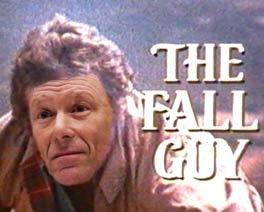
    But before we use our clearly inferior photoshop skills to land Libby the lead role in "Monk," the cynic in DB tries desperately not to imagine Lyndie England taking over for Heather Thomas and gives Libby the starring role he will likely own -- The Fall Guy.

    It's probably completely true that the Scoot spent his weekends creating his own Dewey Decimal system for tracking his perceived foes.

    But isn't it a little too convenient that as possible indictments are coming down, a single administration official (and not named Rove) is being characterized as the kind of guy who would go too far when it came to Joe Wilson?

    Is it a coincidence that "I. Scooter Libby" and "G. Gordon Liddy" sound so similar? ("If somebody wants to shoot me, I'm prepared to have that done. You just let me know when and where, and I'll be there.")

    The bar's set pretty high, Scoot!

    Labels: ,